One-pot tomato pasta for one
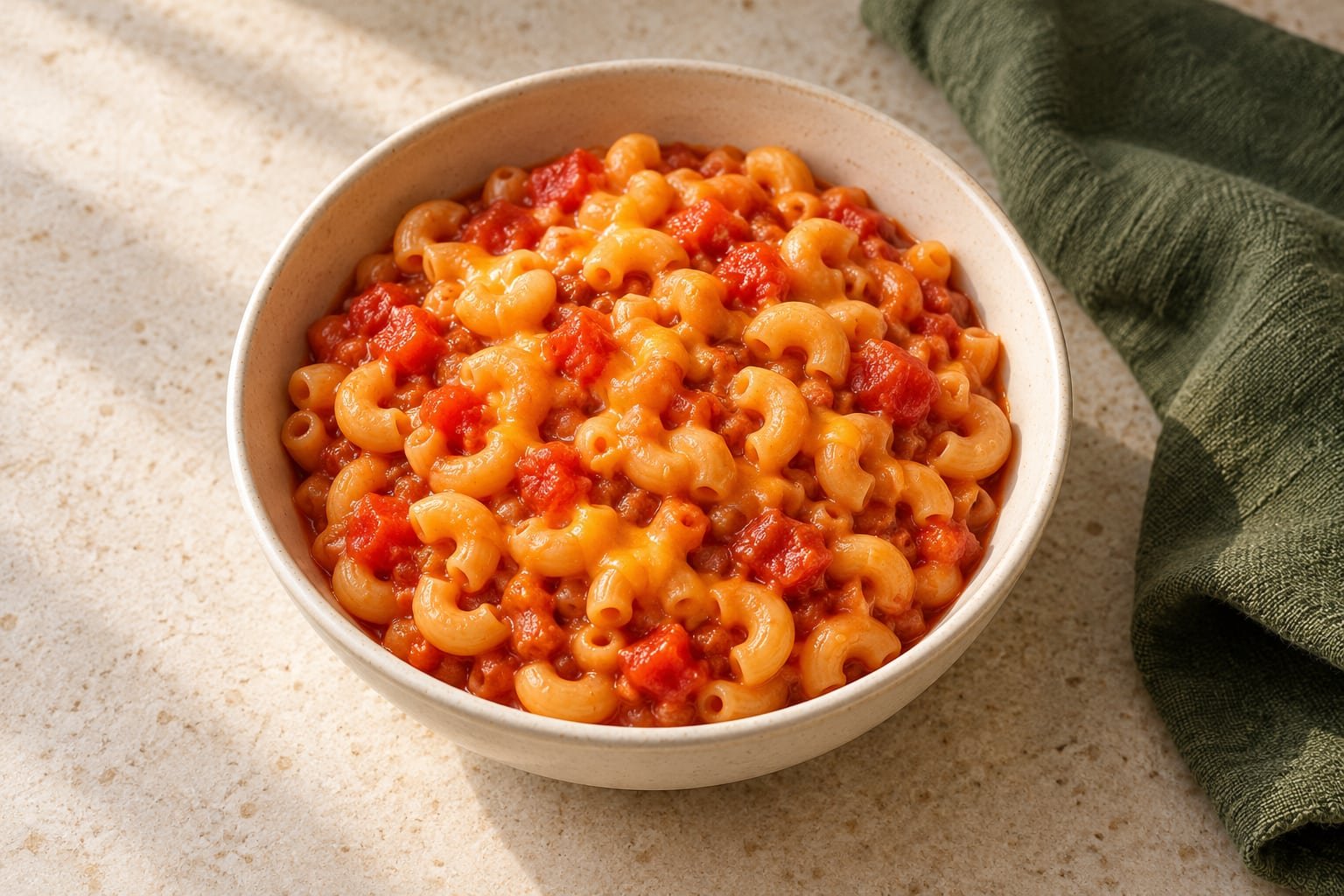
A warm bowl of pasta and one saucepan to wash? Lovely. This tomato pasta for one cooks the dry pasta right in the sauce, with measured water and a little cheddar. Follow along for stirring, liquid and doneness checks.
Recipe by First Skillet · Recipe and source policy.
AI-assisted recipe draft; not yet kitchen-tested.
18 minutes total · 1 serving · dinner
Prep: 3 minutes. Cooking: 15 minutes.
Jump to ingredients · Jump to method · Cooking help
Ingredients
- 3/4 cup Small dry pasta (85 g) — Approximate measure of small dry pasta; the shape affects the amount in a cup.
- 3/4 cup Canned diced tomatoes (200 g) — Approximate; include the tomato juice.
- 3/4 cup Tap water (180 ml)
- 1 tsp Neutral cooking oil (5 ml)
- 1/8 tsp Table salt (0.6 g)
- 1/4 cup Shredded cheddar (28 g) — Shredded cheese; measure loosely, without packing it down.
Your kitchen tools
- Stove or cooktop
- Refrigerator
- 1 × Small saucepan with lid
- 1 × Heat-safe spatula or cooking spoon
- 1 × Can opener
- 1 × Measuring cups and spoons
- 1 × Lidded food container
- 1 × Individual dinner bowl
- 1 × Fork
Set out a bowl and fork for each person eating. The saucepan and cooking utensil are for making dinner, so the planner counts your tableware separately.
Let’s make it.
- Add the dry pasta, tomatoes with their juice, measured water, oil, and salt to a saucepan.
- Bring to a gentle boil, then reduce the heat and simmer uncovered. Stir often so the pasta does not stick.
- Begin checking after 10 minutes. Continue until the pasta is tender, adding a small splash of water if it becomes dry before the pasta is done.
- Turn off the heat and stir in the cheese. Let stand briefly so the sauce thickens before serving.
A little helpful know-how.
- Use the pasta package time as a starting guide. Different shapes take different times, so check the pasta itself.
- Pop the unused canned tomatoes into a covered food container and refrigerate them promptly. That’s the start of another meal.
Let’s cook the pasta right in the sauce
The dry pasta goes straight into the saucepan with the canned tomatoes, their juice and the measured water. That means one less pot to wash. Keep the added water in the plan: thick sauce on its own doesn’t give the pasta the same starting mixture.
Give the pasta box a quick check
Use the small dry shape listed in the ingredients, such as elbows or small shells. Keep the juice from the canned tomatoes. Fresh pasta, filled pasta and a different sauce are not direct swaps for this method. Use the package cooking time as a guide, then check the pasta itself.
Stay nearby and give it a stir
Bring the mixture to a gentle boil, reduce the heat and simmer uncovered as the method describes. Stir often, reaching the bottom of the saucepan. Cook larger plans as separate original-size batches.
- Dry pan, firm pasta: add a small splash of water, stir and continue cooking. Check again before adding more.
- Tender pasta, soupy sauce: stop adding water. Simmer uncovered briefly, stirring and checking often, so some liquid can reduce. Avoid cooking the pasta until it becomes mushy; the cheese and short rest also thicken the finished sauce.
Let the pasta tell you when it’s ready
Start checking when the method says to. You’re looking for tender pasta; the timer is only part of the picture. Once it’s tender, turn off the heat, stir in the cheddar and let the sauce stand briefly before you serve it.
Method background: Campbell’s one-pot tomato pasta example also cooks dry pasta in a tomato mixture with added water.
Check the saucepan and lid guide See two dinners with shared groceries Try chickpea tomato pasta next
A quick note before you cook: this recipe is an AI-assisted draft and has not yet been kitchen-tested. Keep the listed ingredient amounts and original batch size, and allow for cooking time to vary.
Before you start
This starter recipe has not yet been kitchen-tested. Follow the food-handling guidance and check product labels for allergens. The amounts and times are for one original batch. Making more of a heated recipe? The planner allows separate batches, one after another, so the listed cookware stays suitable.
Recorded allergens: wheat, milk. Always check product labels and cross-contact; this is not an allergy-safety guarantee.
- Wash hands and produce before preparing food. Refrigerate perishable ingredients and leftovers promptly.
Keep the cheese refrigerated. Transfer any unused opened canned tomatoes, including their juice, to a covered food container and refrigerate promptly. Follow package guidance for using the remaining food.
- Set aside a covered container for each different ingredient left in an opened can. When two recipes use the same leftover ingredient, the planner counts one container for it.
Food-handling guidance and sources
- Wash hands, produce, utensils, and work surfaces. Clean can lids before opening. Keep refrigerated foods at 40°F / 4°C or colder and frozen foods at 0°F / −18°C. Refrigerate perishables and leftovers within 2 hours, or within 1 hour above 90°F / 32°C. Divide larger leftovers into shallow containers. Reheat leftovers to 165°F / 74°C. FDA: Safe food handling
Dietary tags describe the listed basic ingredients. Check every product label for allergens, cross-contact, and animal-derived additives; tags are not an allergy guarantee.
Grocery price references
See how ingredient use differs from the first shopping bill.
The starting prices are U.S. retailer examples checked October 10, 2026, with source links provided. Some retrieved pages may be cached. They aren’t live prices for your local checkout, and the examples come from more than one store. Prices, offers, stock, pack sizes, tax, delivery and other fees can differ. Enter your store’s prices; your changes stay separate from the linked examples.
- Small dry pasta — Walmart reference: Great Value Elbows, 16 oz. 16 oz box — $1.24; checked 2026-10-10.
- Canned diced tomatoes — Walmart reference: Great Value Diced Tomatoes in Tomato Juice, 14.5 oz. 14.5 oz can including juice — $0.96; checked 2026-10-10.
- Neutral cooking oil — Walmart reference: Crisco Pure Vegetable Oil, 16 fl oz. 16 fl oz bottle — $2.97; checked 2026-10-10. This example is a small 16 fl oz bottle. Compare prices at your store; it isn’t a claim to the lowest cost per ounce.
- Table salt — Walmart reference: Great Value Iodized Salt, 26 oz. 26 oz / 737 g carton — $0.94; checked 2026-10-10. The listing supplies 737 g for the 26 oz package, so the printed metric amount is retained.
- Shredded cheddar — Walmart reference: Great Value Mild Cheddar Finely Shredded Cheese, 8 oz. 8 oz bag — $1.97; checked 2026-10-10.
Use more of what you bought
Give the rest of your groceries another meal. Check each recipe’s tools, storage and timing before adding it.
- Simple rice & bean bowl — Reuses: Canned diced tomatoes, Shredded cheddar.
- Chickpea tomato pasta — Reuses: Small dry pasta, Canned diced tomatoes.
- Black bean quesadilla — Reuses: Shredded cheddar.